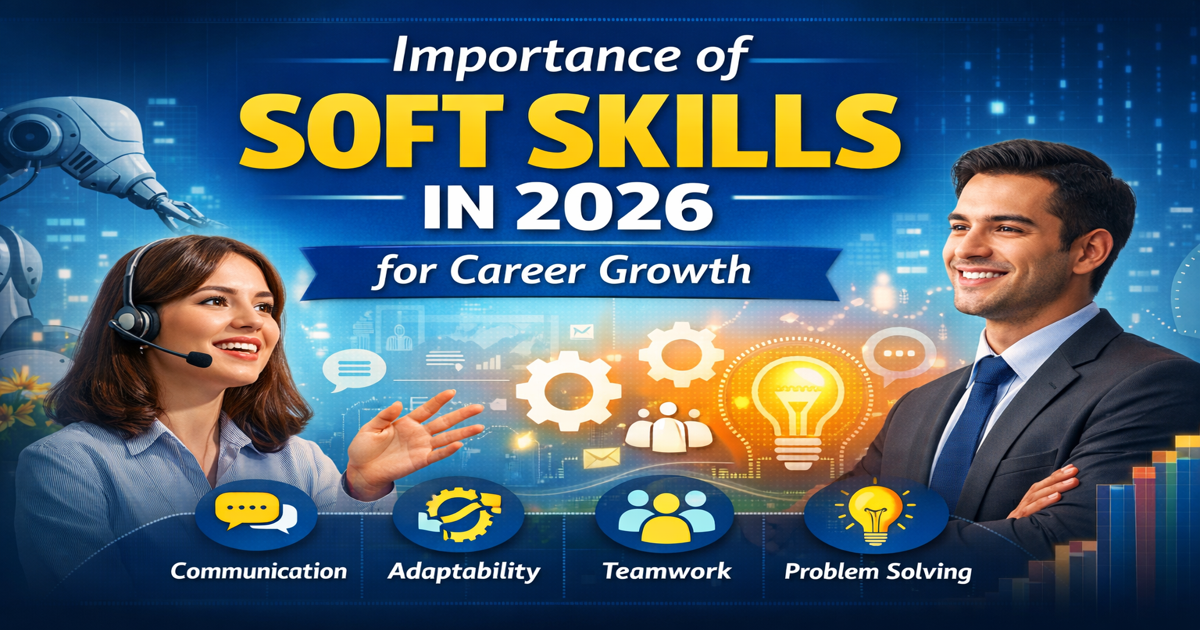
In today’s fast-changing job market, having a degree or technical knowledge is no longer enough. The importance of soft skills has increased more than ever, especially in 2026 where companies are looking for candidates who can communicate, adapt, and work effectively with others.
Whether you are a fresher or an experienced professional, soft skills can be the key factor that decides your career success.
Table of Contents
1. Introduction to Soft Skills
Soft skills are personal and interpersonal abilities that help you interact effectively with others. These include communication, teamwork, problem-solving, and time management.
Unlike technical skills, soft skills are not learned from books alone—they are developed through experience and practice. In today’s competitive job market, employers are not just hiring for skills, but for attitude, behavior, and personality.
That’s why understanding the importance of soft skills is essential for every job seeker.
2. Why Soft Skills Are Important in 2026
In 2026, the workplace is evolving rapidly due to AI, automation, and remote work culture. While machines can handle technical tasks, soft skills remain uniquely human.
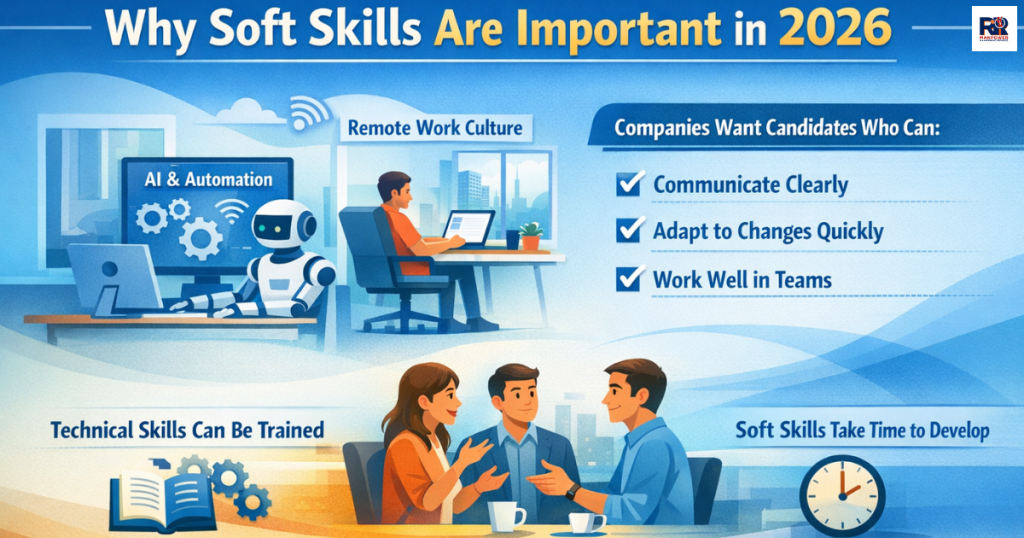
Companies now prefer candidates who can:
- Communicate clearly
- Adapt to changes quickly
- Work well in teams
Employers understand that technical skills can be trained, but soft skills take time to develop. This shift has made soft skills a top priority in hiring decisions.
3. Top Soft Skills Required for Career Growth
To grow in your career, you must focus on developing these key soft skills:
- Communication Skills – Clear speaking and listening improve workplace efficiency
- Teamwork – Ability to collaborate with others towards common goals
- Adaptability – Flexibility to adjust in changing situations
- Problem-Solving – Finding smart and quick solutions
- Time Management – Managing tasks effectively and meeting deadlines
These skills not only help you get a job but also help you grow within an organization.
4. Role of Soft Skills in Job Interviews
First impressions matter a lot in interviews, and this is where soft skills play a major role.
Your confidence, body language, and communication style can make a strong impact on recruiters. Even if two candidates have the same qualifications, the one with better soft skills is more likely to get selected.
Good communication, positive attitude, and active listening can significantly increase your chances of cracking any interview.
5. How Soft Skills Help in Career Growth
Soft skills are not just important for getting a job—they are crucial for long-term success.
They help you:
- Build strong professional relationships
- Handle workplace challenges effectively
- Get promotions and leadership opportunities
Employees with strong soft skills are often seen as reliable, professional, and capable of handling responsibilities. This directly contributes to faster career growth and stability.
Read This Blog Also ➡ Job Consultancy in Sanand | Your Fastest Route to GIDC Jobs!
6. How to Improve Soft Skills (Practical Tips)
Improving soft skills is a continuous process. Here are some simple and effective ways:
- Practice communication daily
- Be open to feedback and learn from mistakes
- Observe successful people and learn from them
- Stay positive and confident
- Apply your learning in real-life situations
Small daily improvements can lead to big changes in your personality and career.
How RR Manpower Helps You Build a Strong Career
At RR Manpower, we understand the real importance of soft skills in today’s job market. We don’t just provide job opportunities—we guide candidates to become job-ready.
From interview preparation to career guidance, RR Manpower helps candidates improve their confidence, communication, and overall personality. Our goal is to connect the right talent with the right opportunities and support them in building a successful career.
Conclusion
In 2026, soft skills are no longer optional—they are essential. While technical skills may help you enter a job, soft skills help you grow and succeed in the long run.
Start working on your soft skills today, because the better you communicate, adapt, and collaborate, the stronger your career will become.